TH
TH  EN
EN Chiang Mai Short-Term Rental Market After the Airbnb Era — New Laws, New Opportunities, and Changed Risks
The Chiang Mai short-term rental market once thrived when hotel law enforcement was less strict. Today the situation has changed significantly.
The Relevant Law
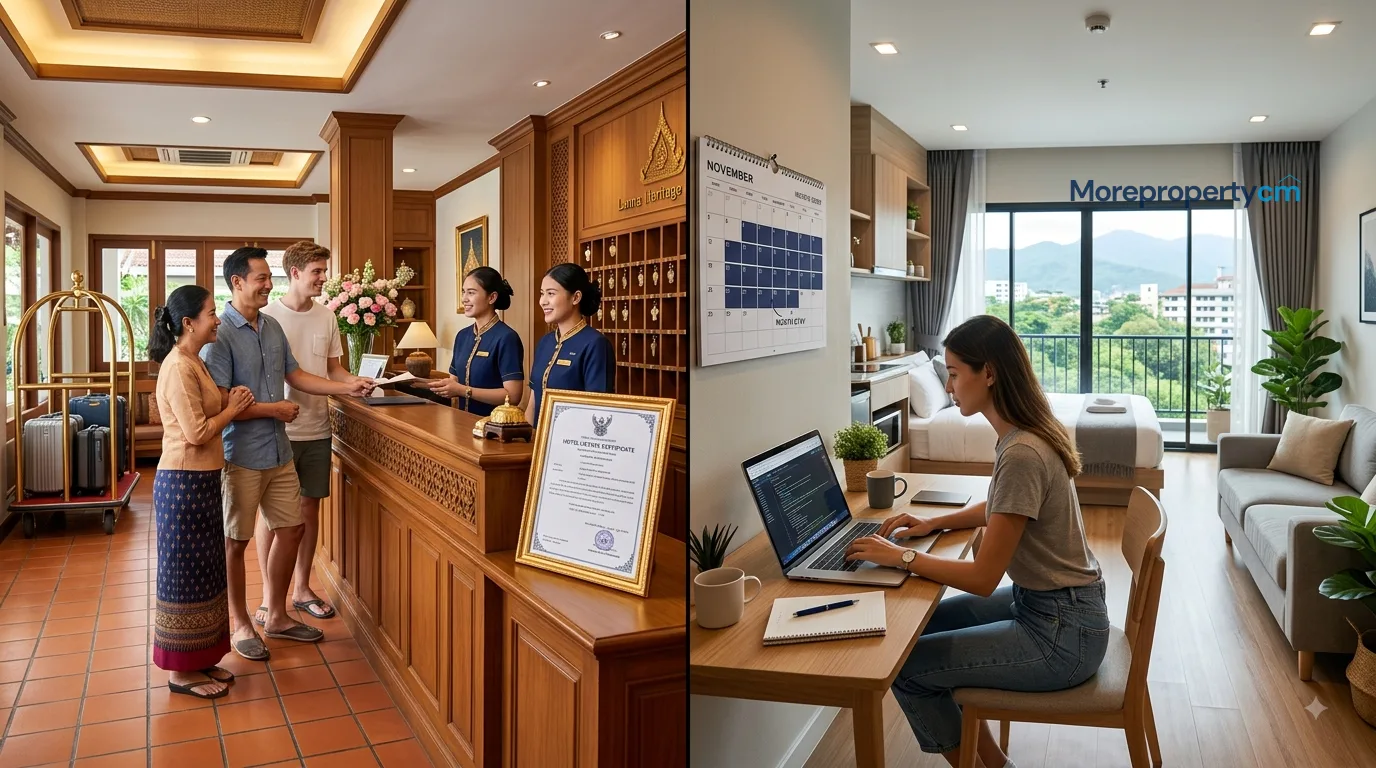
The Hotel Act B.E. 2547 generally classifies renting accommodation to non-owners or non-tenants for fewer than 30 days as operating a hotel — which requires a license. Most condos cannot obtain hotel licenses as they don't meet building requirements.
Impact of Stricter Enforcement
Investors who relied on Airbnb for primary Yield have had to adjust strategies. Some were fined or forced to stop operating. This has reduced short-term rental Supply and increased nightly rates for those operating legally.
Legal Operating Models
1. Licensed hotels and Boutique Hotels: Buildings designed for hotel use with proper licenses — most expensive to invest in but fully legal
2. Registered Homestay: Home-owners residing in the property who host guests in their own home can register as Homestay in some cases
3. Medium-Term Rental (30+ days): Rentals of 30+ days don't fall under hotel law — many investors have pivoted here; Digital Nomads and Slow Travelers respond well to Medium-Term
4. Serviced Villas in licensed projects: Villas or houses in projects properly licensed for hotel or accommodation operations
Remaining Opportunities
Legal operators now face less Supply competition; higher nightly rates; better Occupancy Rates. Medium-Term Rental targeting Digital Nomads still delivers 20-40% better Yield than standard long-term rental.
Remaining Risks
Enforcement is still inconsistent across areas, leaving some operating in grey zones. Risk of fines and shutdown orders remains. Never build a primary Business Model on legally non-compliant Short-Term Rental.
MORE Value. MORE Trust. Always.
Contact us today for a free consultation:
Line: @morecm | www.morepropertycm.co.th
Aurakanya: +66 83-236-9428
Eknarin: +66 96-236-9745
Chiang Mai Short-Term Rental Market After the Airbnb Era — New Laws, New Opportunities, and Changed Risks
13 Aug 2026
137 ครั้ง