 TH
TH  EN
EN Airbnb and Short-Term Rentals in Chiang Mai — What Does Thai Law Say?
The short-stay and Airbnb market in Chiang Mai has grown rapidly, but significant confusion exists about legal compliance. This article explains the real situation.
Relevant Law
Hotel Act B.E. 2547 (2004)
The main law governing accommodation in Thailand states that anyone providing paid temporary accommodation must obtain a hotel license.
"Temporary accommodation" includes rentals under 30 days.
Legal implications
- Renting a house or condo short-term (under 30 days) without a hotel license is illegal under Thai law
- Maximum fine of THB 10,000 and potential criminal prosecution
Real Situation in Chiang Mai
Despite the clear law, in practice
- Thousands of Airbnb listings in Chiang Mai continue operating
- Law enforcement varies by area and period
- Periodic inspection crackdowns do occur
Condominiums and Short-Stay
Most condo projects have rules explicitly prohibiting short-stay because
- Creates security concerns
- Disturbs long-term residents
- Inconsistent with residential purpose
Legal Ways to Run Short-Stay in Chiang Mai
Option 1: Obtain a hotel license
- Cost: THB 50,000-200,000 depending on size
- Processing time: 3-12 months
- Suitable for: Owned houses or buildings
Option 2: Rent for 30 days or more
Rentals of 30+ days do not require a hotel license.
Yield may be lower than short-stay but is legally compliant.
Risks for Short-Stay Investors
- Fines from inspection
- Juristic committee suspending common area access
- Legal action from original building owner
- Reputation and neighbor issues
Recommendation from More Property CM
We recommend everyone wanting to operate short-stay consult a lawyer before proceeding and consider obtaining the correct license for long-term protection.
Note: Laws may change. Always verify the latest information before proceeding.
MORE Value. MORE Trust. Always.
Contact us today for a free consultation:
Line: @morecm | www.morepropertycm.co.th
Aurakanya: +66 83-236-9428
Eknarin: +66 96-236-9745
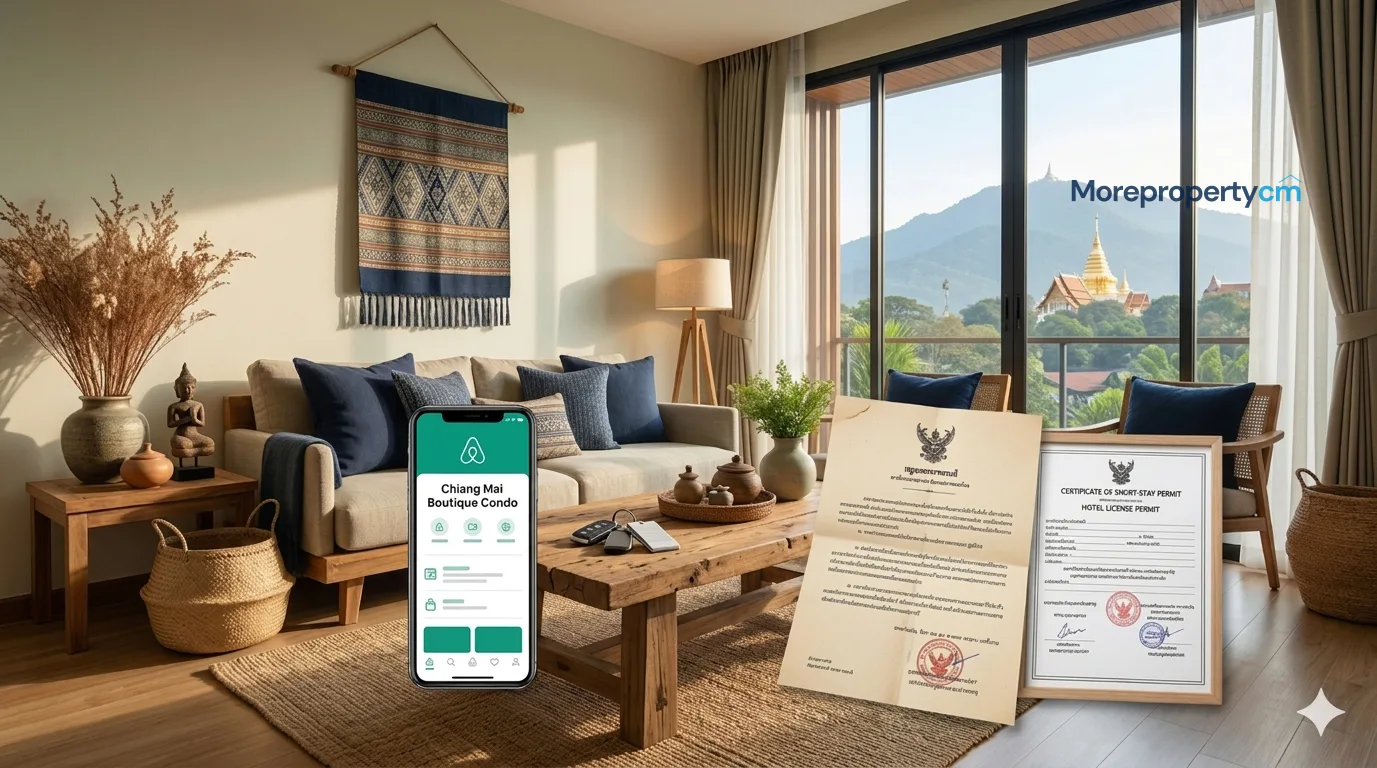
Airbnb and Short-Term Rentals in Chiang Mai — What Does Thai Law Say?
22 May 2026
424 ครั้ง